What to Pack for a 2-Week Trip to Australia
Sydney – Uluru – Cairns – Melbourne
By Andrew Sorokin, Sydney Local Guide — Updated May 2026
The Sydney – Uluru – Cairns – Melbourne loop is the classic first-time route across Australia — and the most challenging to pack for. In one suitcase you must dress for Mediterranean Sydney, the searing red desert of the Centre, the humid tropics of Far North Queensland, and Melbourne's notoriously changeable south. After 20 years of guiding clients through this exact circuit, here is the packing list that actually works.
Why This Route Demands Smart Packing
Most travellers underestimate Australia's geography. Melbourne sits at 37° south — further from the equator than Rome or Madrid. Cairns sits at 16° south — level with the Caribbean. Uluru sits in the dry red heart of the continent at 25° south, where the desert can scorch you at 40 °C by day and chill you at 5 °C before dawn. In a single week you can move through four climate zones. The secret to comfort here is not bringing more clothes — it is bringing the right layering system: light, breathable base layers under a pack-away wind layer, with one warm mid-layer for cool desert nights and over-air-conditioned interiors.
| City | Climate | Summer (Dec–Feb) | Winter (Jun–Aug) | Key Feature |
|---|
| Sydney | Humid subtropical | 19–26 °C, sunny | 8–17 °C, mild | Strong UV year-round, cool sea breeze evenings |
| Uluru / Red Centre | Hot arid desert | 22–38 °C, can hit 40+ °C | 5–22 °C, freezing nights | Huge day/night range, flies, dust, no shade |
| Cairns | Tropical | 24–31 °C, very humid (wet season) | 17–26 °C, dry | Tropical downpours, marine stingers Nov–May |
| Melbourne | Temperate, oceanic | 14–26 °C, dry winds | 6–14 °C, wet | "Four seasons in one day" — weather can flip in 30 min |
UV reality check: Australian sun is the strongest in the developed world. The UV index regularly hits 11+ (extreme) from October through April. You can burn through cotton in 30 minutes in Cairns. Pack sunscreen and long-sleeve sun shirts before anything else.
Australia's Extreme Sun: Why Tourists Burn in 10 Minutes
Australia leads the world in skin cancer — two in three Australians are diagnosed with it by age 70. The trap for visitors is that UV radiation is invisible and gives off no heat: you can burn badly on a cool, breezy or overcast day (light cloud still lets through up to 90% of UV). And it is barely about the "ozone hole" — that sits over Antarctica and closes by summer. The real reasons: in January the Earth is 7% closer to the Sun, the clean ocean air filters almost nothing, and the latitudes are low.
UV Index: Australia vs the Cities You Know
| Location | Peak UV index (midday) | What it means |
|---|
| Darwin / tropics | 12–14+ (year-round) | Sun nearly overhead — burn in < 10 min |
| Cairns, Queensland | 13–15+ (Dec–Jan) | Extreme — off the scale |
| Sydney / Melbourne | 11–13 (January) | A "dry" burn; higher than the Asian tropics |
| Phuket / Bali | 11–12 | Masked by humidity & cloud (feels milder) |
| Los Angeles | 10–11 (July) | Even the peak ≈ an Australian mid-morning |
| Paris | 7–8 (July) | Moderate — far longer time to burn |
Time to Burn by Skin Type (at UV index 12+)
| Skin type (Fitzpatrick) | Time to burn |
|---|
| I — very fair, freckles, red/blond hair | 7–10 minutes |
| II — fair skin, blue/grey eyes | 10–15 minutes |
| III — light olive, darker blond | 15–20 minutes |
| IV — olive skin, dark hair & eyes | 20–30 minutes |
Most European and North-American visitors are type I–III — so 15 minutes in the sun is enough to burn.
Sun protection the Australian way (the "5 S" rule): SPF 50+ broad-spectrum sunscreen (about 7 teaspoons for the whole body, applied 20 minutes before you go out and reapplied every 2 hours) · a broad-brimmed hat, not a cap · UPF 50+ clothing · sunglasses · shade. Protection is needed whenever the UV index is 3 or higher — which in Sydney is most of the year.
If you do get burnt: get into shade at once → cool (not icy) shower or compress → drink plenty of water → ibuprofen within the first 24 hours. Do not apply oil or petroleum jelly, and never pop blisters. See a doctor if you have a fever, nausea, or large blisters.
Sources: ARPANSA, Cancer Council Australia, Bureau of Meteorology.
Basic Wardrobe (Main Clothing)
T-shirts and tank tops — 5 to 7 pieces
Choose breathable natural fabrics (cotton, linen, merino) or quality moisture-wicking synthetics. Light colours win in Australia — a black t-shirt in Cairns is genuinely uncomfortable. Merino wool is worth the investment: it doesn't smell after multiple wears and dries overnight in humid Cairns.
Shorts — 2 pairs
Indispensable for Sydney and Cairns. Bring one pair of dressier shorts (chinos, not gym shorts) for restaurants and one pair for beach/active wear. Pro tip: avoid white shorts — the red soil in the Outback and Cairns red dirt road dust are unforgiving.
Jeans or thick trousers — 1 pair
Useful for Melbourne (where evenings often drop to 10–12 °C even in summer) and for evening walks in Sydney. Skip thick jeans for Cairns — they will be punishing in 90% humidity.
Light linen or cotton pants — 1 pair
A must for Cairns. They protect against tropical mosquitoes in the evenings, prevent sunburn on legs, and keep you cool. Loose fit only — tight fabric and tropical humidity are a bad combination.
Long-sleeved shirt (light-coloured)
One of the most important items in your bag. Critical sun protection in all three cities and the standard local solution for snorkelling on the Great Barrier Reef. A loose linen or cotton shirt with a collar gives you neck protection too.
Smart Casual outfit
One dress, or a nice pair of trousers with a shirt or blouse. Useful for dinners at higher-end Melbourne or Sydney restaurants. Australia is relaxed, but rooftop bars and harbour-view restaurants politely expect more than a t-shirt.
Warm Layers & Weather Protection
Fleece jacket, thick hoodie, or warm cardigan
A non-negotiable item for Melbourne. Cold ocean winds along the Great Ocean Road can drop the felt temperature by 8–10 °C in minutes. Also essential for over-air-conditioned domestic flights and sightseeing buses — Australian air-conditioning is famously aggressive.
Light windbreaker or rain shell
Melbourne can go from sunshine to horizontal rain in 15 minutes. Cairns delivers sudden, dramatic tropical downpours during the wet season (Nov–Apr). Pick a windbreaker that folds into its own pocket or a backpack — you will carry it constantly. A cheap plastic poncho is a fine backup but a real shell is worth the space.
The Twelve Apostles secret: The wind chill at the famous Twelve Apostles lookout is brutal even on a sunny 25 °C Melbourne day. Locals always carry a layer. Tourists in t-shirts always look miserable.
Footwear
Comfortable sneakers — 1 pair
The single most important item of footwear. You will walk 12–20 km a day in Sydney and Melbourne. Shoes must be broken in before you fly — this is not the trip to test new sneakers. Look for breathable mesh uppers; Cairns will appreciate them.
Trekking sandals or comfortable open-toe shoes
Ideal for Cairns and tropical excursions. A pair of sport sandals with proper grip (Teva, Keen, etc.) doubles for boat trips, river walks, and hot-weather sightseeing. Skip cheap rubber sandals — you will slip on wet boat decks.
Flip-flops (Australians call them thongs)
For beaches, hotel pools, boats on the Great Barrier Reef, and showering at hostels. Yes, "thongs" means flip-flops here. No, do not use the British meaning at the airport.
Beach & Water Gear
Swimwear — 2 sets
Two sets is non-negotiable for Cairns. Tropical humidity means swimwear takes 24+ hours to fully dry. With one set you will be putting on damp swimwear every morning — and damp swimwear breeds skin problems fast.
Rashguard (Lycra UV shirt)
Strongly recommended. Protects shoulders and back from sunburn during 4–6 hour Reef snorkelling trips. Doubles as a stinger barrier during marine stinger season (Nov–May) when box jellyfish are present. Most reef boats provide stinger suits, but having your own UV shirt means you can stay in the water longer.
Quick-dry microfibre towel
Folds to a fraction of a regular towel and dries in 30 minutes. The hotel will have towels but you do not want a soaking 2 kg bath towel back in your day pack.
Accessories & Health Kit
Sunscreen SPF 50+
Apply every day in all three cities, even when overcast. The CSIRO confirms 80% of UV passes through cloud. Local Australian brands (Cancer Council, Banana Boat) are formulated for the conditions; bring a tube and refill at any pharmacy. Reef-safe formulation if you are visiting the Great Barrier Reef — not optional.
Sunglasses — preferably polarised
Cuts harbour and reef glare dramatically and reduces eye fatigue while driving. UV-rated only. Australian sun fades cheap dollar-store sunglasses within days.
Headwear
A cap is the minimum. A wide-brimmed hat is much better — Akubras are the local solution and double as a souvenir. Consider a flap-neck cap for the reef boat day.
Tropical-strength insect repellent
Required in Cairns for protection against midges (sandflies) and mosquitoes. Look for 30%+ DEET or picaridin formulations labelled "Tropical Strength." The bites from north Queensland sandflies are far worse than the mosquito itself — protect ankles and arms at dusk.
Power adapter — Australian Type I
Three flat pins arranged in a V. Different from US, EU and UK plugs. A universal travel adapter is fine; a dedicated Type I is cheaper and reliable.
Reusable water bottle
Tap water is excellent across all three cities — in fact Sydney and Melbourne tap water rates among the cleanest in the world. Free public refill stations are everywhere (parks, train stations, beaches). A 750–1000 ml bottle saves you AUD 5–7 per day on bottled water.
Motion sickness medication
Critical if you are prone to seasickness. The 90-minute boat ride to the outer Great Barrier Reef can be choppy, and there are no pharmacies once you are at sea. Take it 30–60 minutes before boarding.
Pharmacy bag (the basics)
- Blister plasters — you will walk further than you think.
- Aloe vera gel — for the inevitable first sunburn.
- Personal prescription medication, in original packaging with a doctor's letter (Australian customs takes this seriously).
- Electrolyte sachets — cheap insurance for tropical Cairns.
City-by-City Specifics
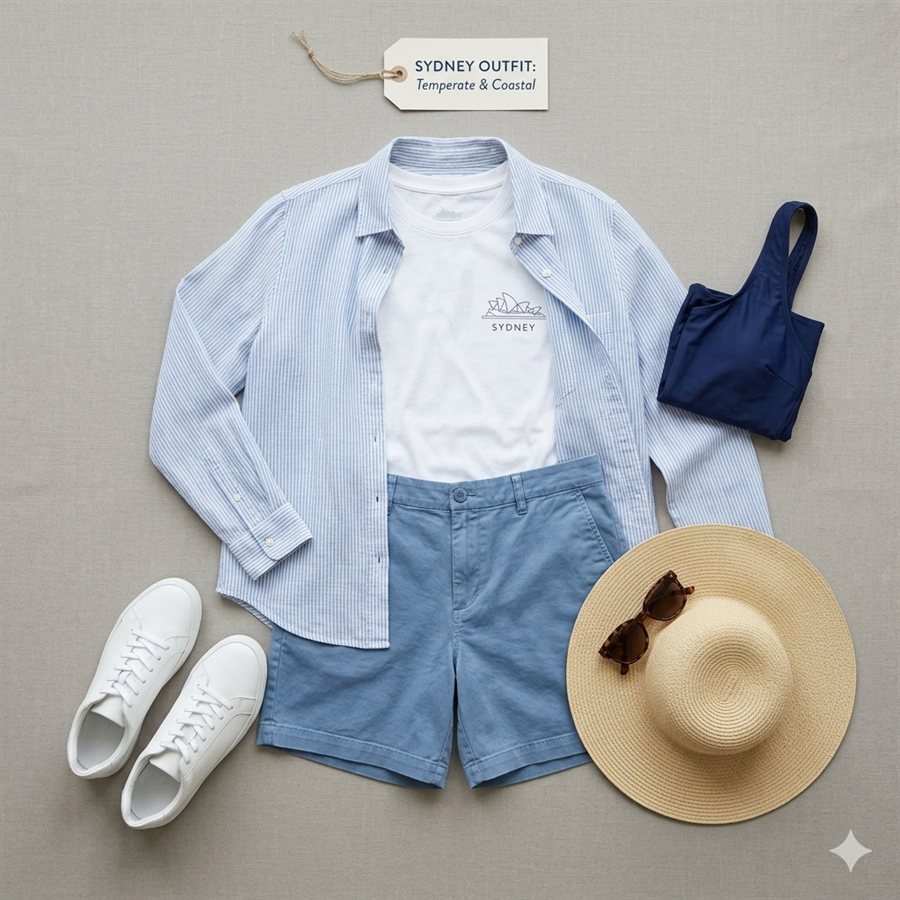
Sydney — The Easy Start
Sydney is the most forgiving stop on the loop. Mediterranean climate, dry summer breezes, mild winters. The catch: harbour and beach winds in the late afternoon and evening can be cool even in summer.
- Daytime: shorts, t-shirt, sneakers, hat, sunglasses.
- Evening at the harbour: add a long-sleeve shirt or light jacket — the breeze off the water gets sharp.
- Bondi / Manly beach day: swimwear under your clothes, rashguard for swimming, thongs, microfibre towel.
- Blue Mountains day trip: add a fleece — the plateau is 1000 m elevation and 5–8 °C cooler than the city.
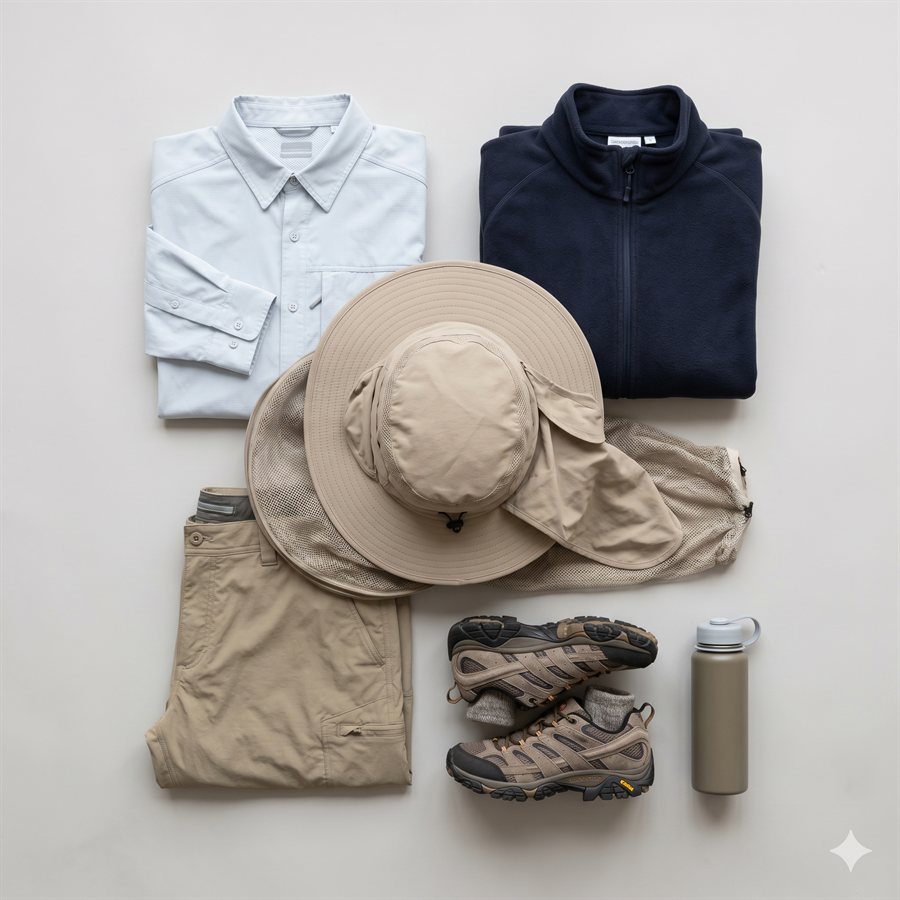
Uluru & The Red Centre — The Desert Extreme
The Red Centre (Uluru, Kata Tjuta, Kings Canyon) is the climate stop where most travellers get caught out. Daytime temperatures climb to +40 °C and beyond in summer. Then the sun goes down and the desert can drop to +10 °C — or below freezing in winter. There is almost no shade. And the flies in spring and summer are legendary — they will land on your face every two seconds.
- Fly net: the single most important item for Uluru. A simple mesh head net (A$5 at any Outback servo) lets you actually look at the rock instead of swatting. Locals wear them without embarrassment.
- Wide-brimmed hat (not a cap): an Akubra or any 360° brim hat protects ears, neck and the back of your head. A baseball cap leaves your neck burning by lunchtime.
- Long-sleeved shirt and long lightweight pants: counter-intuitive but cooler than t-shirts — they block sun, dust and flies. Light colours only; loose linen or technical hiking fabric.
- Warm jacket / fleece for sunrise & sunset: the iconic Uluru sunrise tour leaves at 5 am in temperatures that can be 8–12 °C even in summer. Visitors in t-shirts shiver through the moment of their lives. Bring a layer.
- Closed-toe shoes: sandals are a mistake here. The desert is full of spinifex spikes, sharp rocks, and the occasional kangaroo rat hole. Trail shoes or trainers only.
- Extra water capacity: bring a 1.5–2 L bottle. Park rules require minimum water for any walk; dehydration is a real risk.
Local tip: the flies disappear at sunset and stay gone until about 9 am the next morning — a sunset visit to Uluru is far more comfortable than a midday one. Sunrise viewing platforms warm up by 8 am and the flies arrive with the warmth.
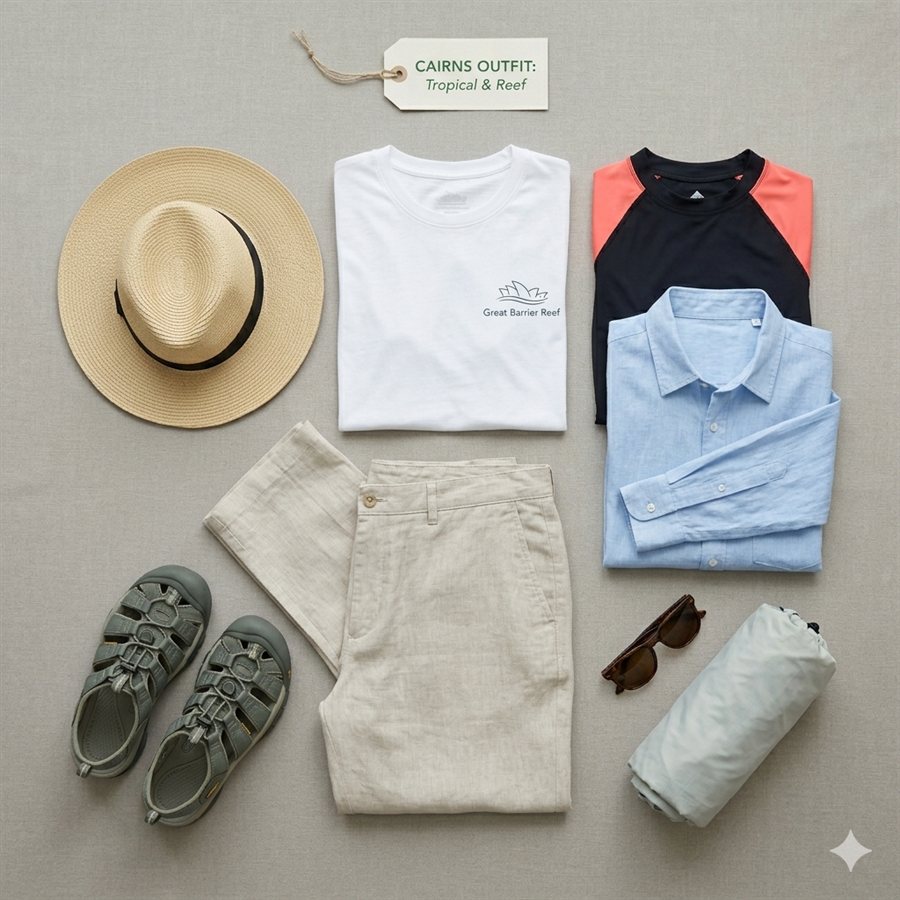
Cairns — The Tropical Test
Cairns is hot and humid year-round. The wet season (Nov–Apr) brings tropical downpours; the dry season (May–Oct) is paradise weather (24–28 °C, low humidity). The city itself has no swimming beach — saltwater crocodiles and stingers — so you swim in the famous Esplanade Lagoon, hotel pools, or out on the Reef.
- Daytime: light cotton/linen, breathable t-shirt, sun hat, polarised sunglasses, SPF 50+.
- Reef boat day: swimwear, rashguard, thongs, sunglasses on a strap, motion sickness medication, dry change of clothes for the trip back.
- Evening / Daintree rainforest: long sleeves and long pants for mosquito protection. Tropical-strength repellent on exposed skin.
- Wet season visits: always have a folded poncho or shell in your day pack — afternoon thunderstorms are dramatic but short.
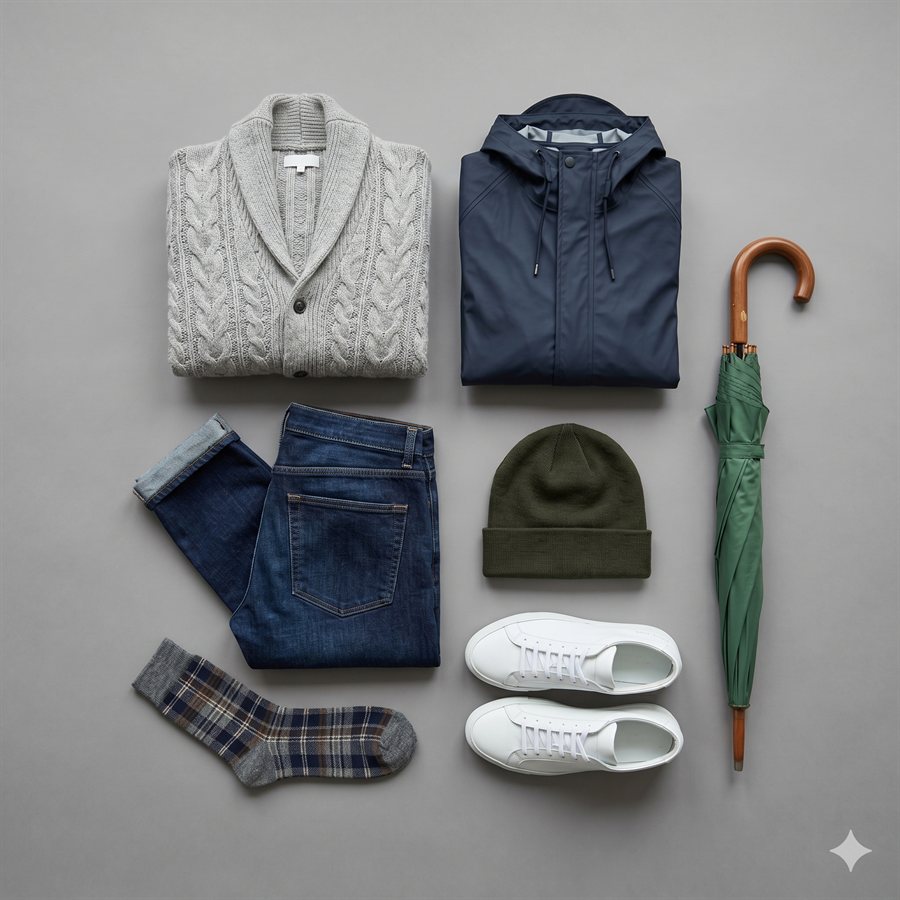
Melbourne — The Layering Challenge
Locals say Melbourne has "four seasons in one day" and they are not joking. Mornings can start at 12 °C, hit 30 °C by lunch, then drop back to 16 °C with a southerly buster by dinner. Always carry a backpack with a layer.
- Always with you: windbreaker, light cardigan or fleece, sunglasses.
- Great Ocean Road day: add gloves and beanie if visiting in winter (May–Sept). The wind at the Twelve Apostles is severe.
- Restaurant evenings: Smart casual is welcome; Melburnians dress up more than Sydney.
Common Packing Mistakes Tourists Make
- Bringing only "summer" clothes for a December–February trip. Yes, it is summer — but Melbourne, Blue Mountains, Uluru sunrises and Reef boat decks all need a warm layer.
- Underestimating UV. "I tan, I won't burn" is heard in our cars every week. By day three the same client has an aloe vera bottle.
- Skipping the fly net for Uluru. The single biggest regret in the Red Centre. Travellers without one cut their walks short within an hour.
- A baseball cap instead of a wide-brimmed hat for the desert. Sunburned ears and neck are the universal first-day Uluru souvenir.
- New sneakers. A six-hour Sydney walking tour is not the place to break in shoes. Two days of blisters can ruin a week of touring.
- Heavy jeans for Cairns. Thick denim plus 90% humidity equals misery. Bring lightweight pants.
- One swimwear set. See above — in tropical Cairns you need two minimum.
- Forgetting a windbreaker for Sydney. Even in February, a 7 pm harbour cruise can have a chill that catches travellers off guard.
- Cheap sunglasses. No UV rating = damaged eyes. Bring proper polarised glasses or buy them on day one.
Quick Pre-Flight Checklist
Clothing
- 5–7 t-shirts (light colours, breathable)
- 2 pairs shorts (1 dressy, 1 active)
- 1 pair jeans / thick trousers
- 1 pair light linen / cotton pants (Cairns)
- 1 long-sleeve sun shirt
- 1 fleece / hoodie / cardigan
- 1 packable windbreaker / shell
- 1 smart casual outfit
- 2 sets swimwear
- 1 rashguard (Lycra UV shirt)
- Underwear & socks (8–10 days)
Footwear
- Comfortable broken-in sneakers
- Trekking sandals or open-toe shoes
- Flip-flops / thongs
Accessories & Kit
- Wide-brimmed sun hat (Akubra style)
- Mesh fly net for Uluru / Red Centre
- Polarised UV sunglasses
- SPF 50+ sunscreen (reef-safe formula)
- Tropical-strength insect repellent
- Quick-dry microfibre towel
- Reusable water bottle (1 L+ for desert walks)
- Power adapter Type I
- Motion sickness tablets
- Personal medication + doctor's letter
- Plasters, aloe vera, electrolytes
One Final Tip from 20 Years of Guiding
The best traveller's secret on this route is laundry. Every hotel with a stay of 3+ nights has a laundry service or self-service machines. Wash your gear twice on a 12-day trip and you can pack 30% less. A modest wardrobe washed regularly beats a giant suitcase every time — and you will move faster between Sydney, Uluru, Cairns and Melbourne airports without it.
Veteran move: wear your heaviest items (jeans, sneakers, fleece) on the international flight. Pack the light tropical gear and the desert layers in your suitcase. You arrive in Sydney already comfortably layered and your bag is lighter for the connecting flights to the Centre and the Reef.
Ready to Plan the Trip Itself?
We have been guiding the Sydney – Uluru – Cairns – Melbourne route for 20 years. Whether you want a 7-day overview or a 14-day deep dive, our local expert guides handle the logistics so you focus on the experience.