I drive guests to the Blue Mountains every week, all year round. Each season transforms this UNESCO World Heritage landscape into something completely different. Here is my honest, season-by-season guide so you can choose the best time for your visit.
The Short Answer
The best time to visit the Blue Mountains is autumn (March to May) for the most comfortable weather and the fewest crowds, or spring (September to November) for wildflowers and dramatic waterfalls. But honestly, the Blue Mountains are spectacular in every season — each one simply offers a different experience.
The Blue Mountains sit roughly 1,000 metres above sea level and are consistently 8 to 12 degrees cooler than Sydney. This means even in the heat of a Sydney summer, the mountains are pleasant. And in winter, the crisp cold air and misty valleys create an atmosphere that is genuinely magical.
Season-by-Season Breakdown
Autumn (March – May) — Best Overall
Temperature: 8–18°C | Crowds: Low to Moderate
Autumn is my favourite season in the Blue Mountains. The days are mild and clear, the summer humidity has gone, and the deciduous trees in the village gardens turn gold, red, and amber. The famous Three Sisters look their best in the warm afternoon light of an autumn day.
The walking trails are at their most comfortable. You can hike for hours without overheating, and the air is crisp and clean. Waterfalls have good flow from the late-summer rains, and the bushland is lush and green. Tourist crowds thin out significantly after the Easter school holidays.
Winter (June – August) — Most Atmospheric
Temperature: 2–12°C | Crowds: Low
Winter in the Blue Mountains is cold, and that is precisely why it is special. Morning frost covers the lookouts, mist fills the valleys, and on rare occasions snow dusts the highest peaks. The Jamison Valley shrouded in fog is one of the most atmospheric sights in New South Wales.
The villages of Katoomba and Leura come alive with open fireplaces, hot chocolate, and a cosy charm that is unique to this region. If you visit during the Yulefest celebrations (June to August), many restaurants and guesthouses offer Christmas-themed feasts — a novelty for visitors from the Northern Hemisphere experiencing their first mid-year winter.
Dress warmly. Bring layers, a proper jacket, and gloves for the early morning lookouts.
Spring (September – November) — Best for Wildflowers
Temperature: 10–20°C | Crowds: Moderate
Spring is when the Blue Mountains burst into colour. Native wildflowers — waratahs, flannel flowers, and boronia — bloom across the bushland, and the waterfalls are at their most powerful after the winter rains. Wentworth Falls and Empress Falls are thundering cascades in October.
The birdlife is exceptional in spring. Crimson rosellas, king parrots, and sulphur-crested cockatoos are everywhere. If you bring binoculars, you may spot lyrebirds on the forest floor performing their extraordinary mimicry displays.
Spring is the ideal season for the Blue Mountains and Jenolan Caves extended tour, as the drive through the mountains is alive with colour.
Summer (December – February) — Escape the City Heat
Temperature: 14–26°C | Crowds: High
While Sydney swelters through 35-degree days, the Blue Mountains remain a comfortable 20 to 26 degrees. This makes them the perfect summer escape, but it also means the main lookouts and Scenic World can be crowded, especially during the Christmas and January school holiday period.
On a Blue Mountains private tour, I avoid the crowds by visiting lesser-known lookouts and timing our arrival at Echo Point for early morning or late afternoon. Summer also brings longer daylight hours, which means more time for bushwalks and hidden waterfalls that group tours cannot reach.
Be aware that extreme heat days (above 35°C) can trigger bushfire warnings and occasional track closures. I monitor conditions daily and always have alternative routes planned.
Best Time of Day for Photography
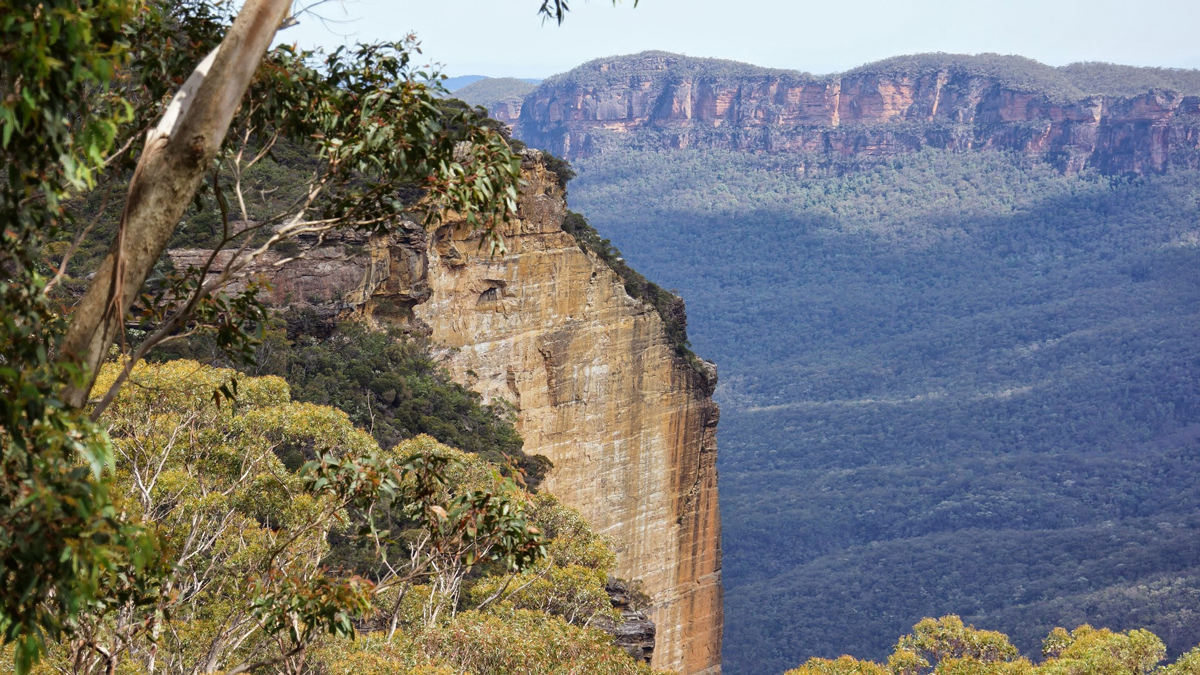
The Blue Mountains are a photographer's paradise, but timing matters enormously. The golden hour — the first and last hour of sunlight — transforms the sandstone cliffs into glowing amber and the blue haze becomes a deep, rich purple.
Morning (sunrise to 9am): Best for the Three Sisters and Echo Point. The sun rises behind you, lighting up the rock face beautifully. Mist often lingers in the valleys, creating dramatic layered compositions.
Midday: Harsh light, but the blue haze is at its most visible from distant lookouts like Govetts Leap and Lincoln's Rock.
Late afternoon (3pm to sunset): The warm light makes everything glow. Waterfalls catching the low sun are spectacular. This is also when cockatoos fill the sky returning to roost, creating excellent action shots.
Local Tip: For the best photographs, I plan our
Blue Mountains tour around the light. On a private tour, we are not locked into a bus schedule — we arrive at each spot when the light is right.
What to Bring — Any Season
Layers: The temperature can change 10 degrees between Sydney and the mountain tops. Always bring a jacket, even in summer.
Sturdy shoes: Walking trails range from paved paths to rocky bush tracks. Closed-toe shoes with good grip are essential.
Water and snacks: Always carry water, especially in summer. Some of the best lookouts are a 20-minute walk from the car.
Camera with zoom lens: The scale of the canyons is enormous. A wide-angle lens captures the panoramas, while a zoom picks out details in the cliffs and wildlife in the trees.
For a broader view of what to expect from day trips outside Sydney, see our Blue Mountains vs South Coast comparison.
Book Your Blue Mountains Experience
I visit the Blue Mountains every week and know exactly how to make the most of each season. Tell me when you are visiting and I will plan the perfect day.